Share Gwyn Christopher Faile's obituary with others.
Invite friends and family to read the obituary and add memories.
Stay updated
We'll notify you when service details or new memories are added.
You're now following this obituary
We'll email you when there are updates.
Select your format and elements to print
IN LOVING MEMORY OF Gwyn Christopher Faile
Gwyn Christopher
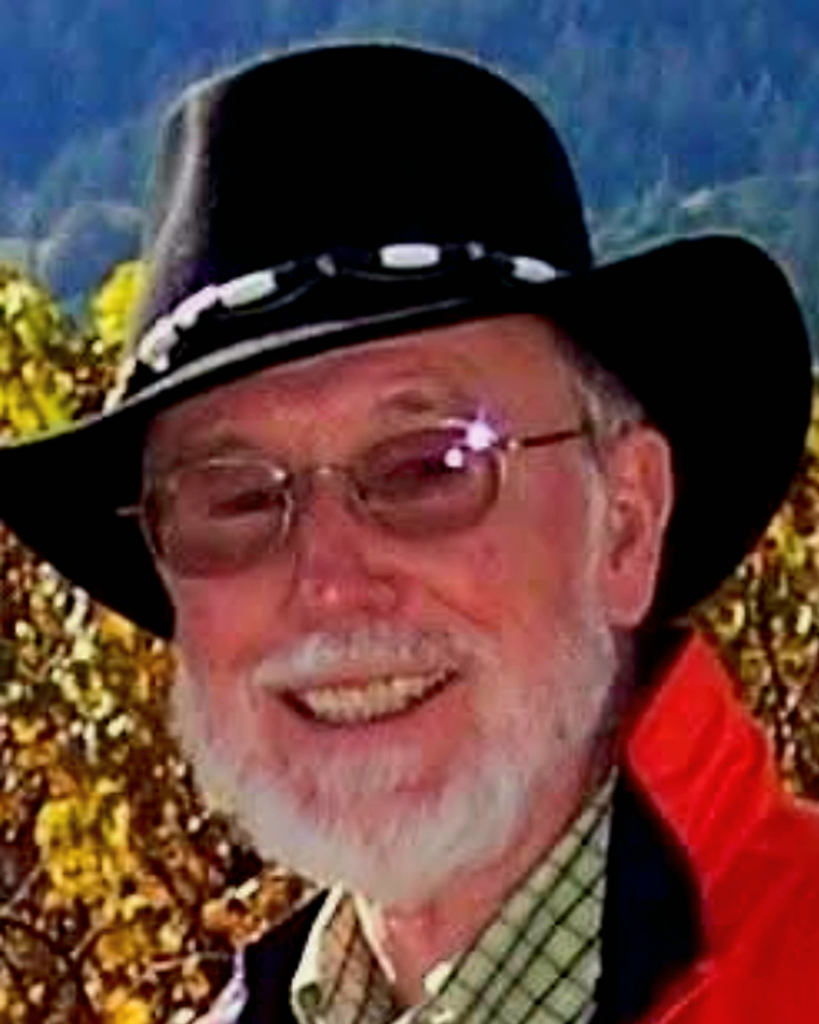
Faile
Feb 3, 1941 — Jun 29, 2026
Huntsville
Gwyn Christopher Faile's Obituary
With deep sorrow, profound sadness, and much love, the family of Gwyn Christopher Faile, 85, shares this tribute honoring his compassionate character-his kindness and empathy that touched many-and his remarkable achievements and legacy, and announces his peaceful passing on Monday, June 29, 2026.
He will be remembered by his son Christopher Shaun Faile; his brother Dr. Garth Dalmain Faile; and numerous other relatives and friends.
He is preceded in death by his parents, Gordon M. and Hattie Pet Faile (Nee: Beverly); his three sisters: Marsha Clark; Betty Jo McIntyre; and Bonnie Powell; and his wife of 52 years, Shirley Frances Faile (Nee: Summers).
A Visitation and Prayer Service will be held at 3:00 PM on Sunday, July 12, 2026, at Berryhill Funeral Home, 2305 Memorial Parkway NW, Huntsville, AL 35810, followed by a Memorial Service at 4:00 PM, and all who wish to celebrate Gwyn's life and legacy are invited.
Memorial Donations may be made in Gwyn's name to Rock Steady Boxing at this website: (https://www.rocksteadyboxing.org/). To contribute, visit the website or contact the organization directly. This reflects his commitment to community and causes his heart close to his heart, encouraging others to honor his legacy through shared values.
The youngest of five children, Gwyn was born in Salitpa, Alabama. His brother Garth fondly recalls the day he first saw his baby brother, highlighting the special bond that reflects the love and closeness within their family with the following words:
“Gwyn was born on Monday morning, February 3, 1941, at about 4 AM. I remember the time well, as I was removed from the room where Mother was to the front bedroom where my sisters were. I remember hearing my mother make a groaning noise, which I did not like. In those days in the country where we lived, the hospital was not an option. We usually had a neighbor come over to help. The person who helped may have been my Aunt Cora because she was the one who assisted mother when I was born. I was delighted to have a younger brother.
“My birthday was February 5, 1937. Because my birthday was so close to Gwyn’s, mother made one birthday cake for us.
“Because our ages were four years apart, Gwyn had his own interests. He was usually constructing something in the backyard. For example, he built a chest for his mother to store clothes.
“As he got older, we played cowboys and Indians. We would often ride our bicycles down to a creek near our home. He learned how to swim before I did. I was jealous because I was older. I believed I was supposed to learn first.
“We had to cook and heat our house with wood. Therefore, Gwyn and I were expected to keep the house furnished with both a stove and a fireplace. To start the fire, we would use a lit piece of wood that ignited easily. This was called fat lite wood.
“One morning, when our mother was milking the cow, Gwyn apparently wanted to increase the fire in the fireplace. At that time, he was approximately one and one-half years old. He took several small pieces of lit wood and attempted to place them in the fireplace. He did not get the wood pieces all the way in the fireplace. It began to burn the wood that supported the mantel over the open fireplace. I was in the kitchen waiting for Mother to return from milking the cow. I noticed that Gwyn came looking at me in the kitchen several times. I decided to go and see what was concerning him. When I got into the fireplace room, I noticed the wood that supported the mantel was on fire. I ran to the back door and called Mother, yelling, ‘The house is on fire!’ She came running to the house, dropping her milk bucket on the way. She quickly grabbed the water bucket from the kitchen and used it to put out the fire.
“My memories of Gwyn highlight his concern for others, his willingness to work hard, and his generosity in sharing his talents, which truly exemplify his caring nature and the deep love he had for those around him."
The following quotation not only offers reassurance but also reflects the strength of our faith and God’s help in our lives: “No guilt in Life, no fear in death, this is the power of Christ. From Life’s first cry to final breath Jesus commands our destiny. No power of hell, no human plan can ever pluck us from His hand, Till He returns or calls us home, here in the power of Christ we stand.”
Gwyn was a strong example for everyone who knew him. He fulfilled the quotation:
“Let the words of my mouth
The meditation of our hearts
Be acceptable in thy sight
O Lord our strength and our Redeemer.”
We honor him by living these words, until we meet again eternally.
He was a caring brother and a beloved presence in our lives. His memory will remain in our hearts forever, guiding us and inspiring us always.
Love,
Garth Faile”
He began first grade in 1947 in a one-room schoolhouse in the Union Chapel community, where one teacher taught grades one through six. At the age of eight, he began third grade in the town of Coffeeville at a larger school with more than one classroom. He graduated from Coffeeville High School in 1959, where he served as Student Body President and Editor of the yearbook, and earned the title of Class Salutatorian. He attended Auburn University, graduating in 1964 with a Bachelor of Science in Mathematics.
While earning his degree, Gwyn began working with NASA as a co-op student on January 2, 1962. He first worked for Mr. Joseph Boehm, Mr. Helmuth Pfaff, Mr. Everett Kuebler, and Mr. Duane Counter. Gwyn felt fortunate to work for these dedicated professionals because they entrusted him with meaningful problems, inspiring pride and admiration for his contributions.
Gwyn developed numerical solutions for equations created by senior engineers. This work not only taught him how to present calculations in an organized fashion but also how to plot them using a French Curve. Gwyn also learned to calculate section properties: areas, centers of gravity, and moments of inertia. He was able to derive these using integration he learned about in the Calculus class he took at Auburn
When he graduated from Auburn in August of 1964, he was hired full-time by Mr. Boehm, where he continued to develop his capabilities in mathematics and engineering. One of the major efforts his team engaged in was the kinematics of mechanisms, meaning they would derive the position of solar arrays, differentiate the position equation to obtain the velocity, and differentiate the velocity to obtain the acceleration. He performed these calculations for the Apollo Telescope Mount (ATM), which was mounted on an early version of the Skylab Space Station.
Another aspect of his work involved Fortran programming of numerical equations, differential and others. Solutions to engineering equations were computationally intensive; the processes for determining a solution were so complex that they required a computer. Gwyn studied Fortran programming at Auburn; he was able to program most of the calculations.
During the 1960s, at NASA's request, he attended night classes at The University of Alabama in Huntsville (UAH). NASA paid for these classes, and in 1970 he became a full-time student. He graduated from UAH in August 1971 with a Master of Science in Advanced Mathematics. This advanced degree proved beneficial in his work at NASA, greatly enhancing his problem-solving capabilities and enabling him to solve increasingly complex problems.
Gwyn began work on the Hubble Space Telescope (HST) in 1972. The use of composite materials had become a major issue in the telescope's development. The materials were designed to be lightweight and strong. At the same time, the fibers could be oriented to create a very low coefficient of thermal expansion (CTE), which is an ideal characteristic for telescope structures. He oversaw the development of computer programs to compute the effective CTE of struts for various fiber orientations.
In 1973, the Branch he was assigned to (Mr. Boehm's old Branch) disbanded, and he was reassigned to the MSFC Stress Analysis Group. This restructuring made Gwyn the only stress contact for HST, making him solely responsible for the strength of its structures.
The primary mirror for the telescope was a long-lead item, and its design depended on the glass material used to construct the mirror: it was decided that Cer-Vit or Ultra Low Expansion (ULE) glass was best suited. Gwyn was asked to serve on a special committee led by Dr. Joe Randall to make the material selection through his contributions; it was determined that ULE would be the best option for the mirror material. As a result, finite element models were built for the mirror and used to analyze various aspects of the mirror
During this time, Gwyn was also assigned to the external tank (ET) of the Space Shuttle. The ET consisted of a liquid hydrogen tank, a liquid oxygen tank, and an internal tank with a crossbeam that distributed Solid Rocket Booster (SRB) thrust loads into the ET. One issue with the tanks was a weld mismatch that caused local bending, which increased stress. The Main Propulsion Test Article (MPTA) had an 80% weld mismatch. While conducting stress analysis tests for this condition, Gwyn worked closely with the Martin stress analyst, and together they entered the hydrogen tank to observe and study the weld mismatch more closely. A decision was made to remove the mismatched welds and reweld them. This effort was determined to be the best solution based on the stress analysis performed by Gwyn and the other analyst for the welds. On Mother's Day 1978, proof/strength testing was performed on the Liquid Oxygen Tank, and the tank buckled. In previous tests of the tank, there was no buckling because water was used instead of liquid oxygen.
Since water and liquid oxygen have similar densities, replacing liquid oxygen with water was considered negligible. However, during previous proof testing, liquid oxygen wasused instead of water. It was determined that the liquid oxygen generated a slight pressure in the tank, providing stabilization that could not be replicated with water. Following this test, liquid oxygen was used for all proof testing, and there was no further buckling of the tank. Gwyn and the Martin engineer did much stress analysis in support of the weld problem on the oxygen tank and its proof test.
Work on the Hubble Space Telescope became a higher priority, which not only expanded the scope of the work but also required it to be completed more quickly. Management had assigned several more people to the HST under Gwyn's direction. Much of the HST was analyzed in-house, especially the Optical Telescope Assembly (OTA).
This newly expanded team was asked to determine the maximum allowable flaw size in a part and to call for further inspection and analysis of the critical initial flaw sizes (CIFS) found in the drawing. All OTA parts were under fracture control. Parts manufactured off-site and unable to be inspected were accepted based on a risk assessment.
In his new role, Gwyn assumed more responsibility for a larger quantity of hardware, especially the Space Shuttle Main Engine (SSME) and Fracture Control via the MSFC FCB. He later became a Branch Chief and the Stress Representative on the MSFC FCB. Additionally, he served as the MSFC Representative on the NASA Fracture Control Panel.
On December 31, 1999, Gwyn retired from NASA after 38 years of Civil Service. After retiring, he worked as a NASA contractor, with much of his work focused on specifying Fracture Control criteria for NASA hardware.
Gwyn was recognized multiple times throughout his career not only for his technical contributions to the space program, many of which are still used today, but also for his leadership and ability to focus and motivate his team to solve increasingly complex problems.
In 1969, he received the NASA Award of Achievement,
"To Commemorate Your Faithful Contribution to the Achievement of Man's Most Ambitious Undertaking - the First Manned Lunar Landing - an Event Unequaled in Human History, Calling Forth a New Age of Discovery, a New Dimension of Hope, and a New Commitment to the Challenges of Man." This award was signed by the Director of the Marshall Space Flight Center, Wernher von Braun.
On May 17, 1988, Gwyn received the NASA Exceptional Service Medal "For exemplary technical contributions to the Space Shuttle Main Engine and Hubble Space. Telescope Projects. This was accomplished through the development and application of fracture mechanics, life, and fatigue techniques to establish the criteria and operational constraints for the Engine and Space Telescope.
On April 20, 1994, he was presented with the Silver Snoopy Award. This is a special honor presented to NASA employees and contractors for outstanding achievements in human flight safety or mission success. The award certificate states that it is "In Appreciation" "For professionalism, dedication and outstanding support that greatly enhanced space flight safety and mission success."
The award is presented personally by NASA astronauts, as it represents their recognition of excellence. It is presented at the recipient's workplace, with the recipient's coworkers present. The Silver Snoopy award is one of several awards overseen by NASA's Space Flight Awareness (SFA) program.
The award consists of a sterling "Silver Snoopy" lapel pin flown during a NASA Space Shuttle mission, a commendation letter (stating the mission on which the Silver Snoopy pin was flown), and a signed, framed Silver Snoopy certificate. Snoopy decals and posters are also given to the recipient.
Silver Snoopy awards are limited to no more than 1% of eligible recipients. An individual can only receive one Silver Snoopy Award in their lifetime. The award is not given posthumously or as a recognition award for an individual's longevity, retirement, or separation from service. If a pin is lost, it may be replaced with a non-flown pin at the SFA Panel's discretion. It is a high honor within NASA.
On June 20, 2000, Gwyn received a Group Achievement Award for "Exceptional dedication and outstanding support for the development of the flight hardware and flight operations of the highly successful Chandra X-Ray Observatory Program".
While Gwyn’s professional accomplishments were remarkable, those who knew him best remember him for his kindness, humility, wisdom, generosity, and willingness to mentor others. He was always eager to help solve a difficult problem, encourage a colleague, or share what he had learned. His quiet integrity and gentle sense of humor left a lasting impression on everyone fortunate enough to know him.
He was a longtime member of Epworth United Methodist Church, where he served on many committees and held leadership roles over the years. His faith remained an important part of his life and guided the way he served both his church and his community.
Funeral Services for Gwyn Christopher Faile
Visitation

Sunday
Berryhill Funeral Home
3:00 - 4:00 pm (Central time)
Funeral Service
Sunday
Berryhill Funeral Home
Starts at 4:00 pm (Central time)
Gwyn Christopher Faile's Guestbook
Visits: 729
This site is protected by reCAPTCHA and the
Google Privacy Policy and Terms of Service apply.
Service map data © OpenStreetMap contributors